Jessie Ware: ‘What’s Your Pleasure? (The Platinum Pleasure Edition)’ – Album Review
Updated: Dec 4, 2023
With her fourth studio album English singer Jessie Ware has created pristine disco paradise. One year later she’s managed to expand its soundscape with a commendable eight-track reissue. Brava!
★★★★½

disco noun
a nightclub for dancing to live and recorded music
popular dance music characterized by hypnotic rhythm, repetitive lyrics, and electronically produced sounds
It is quite hard to remember, in August 2021, what being in ‘a nightclub for dancing to live and recorded music’ is like anymore. The C*VID pandemonium has really taken its toll on us, keeping us from enjoying life in large gatherings and closed spaces. Yet over the last year and a half or so, what might have saved our sanity might be pop music. 2020 saw a number of more or less major releases that helped us make it through the global panini. Those releases were all part of the newest revival of disco music, a genre that came and went in a blink but that left an indelible mark on music as a whole, never truly disappearing for good.
It has influenced many genres – from pop to R&B to rock to electronic to name but a few. Last year it seemed it came back with a vengeance, a vengeance on darkness and sadness. It has hit all corners of the globe, it is infectious – but in the good sense of the word. England’s new pop queen Dua Lipa released her Grammy Award-winning disco/dance-pop/funk hybrid Future Nostalgia in March 2020 (after putting out smash hit ‘Don’t Start Now’ in late 2019 when everything was still normal); the American First Lady of Gay Rights, Lady Gaga, was also hit by the trend on the ’90s house-influenced Chromatica (check tracks ‘Rain on Me’ and ‘Babylon’); Welsh singer Róisín Murphy made a straight-for-the-clubs disco-house record with Róisín Machine; and Aussie queen aptly gave the title Disco to her campy fifteenth studio album. What is promising for the possible longevity of this revival is how these albums all stem from different eras and subgenres of disco, making for unique and various records, a testament to the versatility and durability of the genre.
This also applies to Jessie Ware’s fourth album, What’s Your Pleasure?, which might be the most timeless and accomplished of the five. Yet it almost never happened.
Rewind to the 2018 Coachella edition. Ware was in the midst of her promotion of her 2017 album, Glasshouse. Unfortunately for her, her time slot clashed with that of the year’s breakout hip hop star, Cardi B. The show was deemed by some critics ‘a disaster’. In early 2020 Ware herself stated to The Guardian: ‘Our equipment didn’t work. You know how the audience at Coachella is, uh, pretty young? I’m up there, 33 years old, singing about motherhood. It was just… tumbleweed. My mum was there with me. […] Oh, she was honest. She said, “Darling. Quit.”’ So Ware decided to focus on the podcast she had started to host alongside her mother, Table Manners. As it gained popularity, so did that of the guests whose names are quite astonishing. To name but a few and in no particular order, Dua Lipa, Elton John, Paul McCartney, Mayor of London Sadiq Khan, Dolly Parton, Maisie Williams, Andrew Lloyd Webber, Kylie Minogue have all shared the Wares’ table and mic.
No longer constrained by commercial expectations and label pressures, Ware decided to get back to songwriting, feeling inspired anew, eager to step away from her previous albums’ more melancholy soundscape. The result: a pristine collection of disco paradise and escapism. Helmed mainly by Ware and producer/writer James Ford (Arctic Monkeys, Florence + the Machine, Foals), What’s Your Pleasure? draws from post-Giorgio Moroder ’80s electronic-influenced disco and pays homage to the underground dance music from that era, down to its cover. The record is also filled with warmth and soul, thanks to Ware’s impassioned, seducing delivery and the arrangements, complete with five backup vocalists and a full orchestra (ten violins, three violas, three cellos, a double bass, two French horns, two trumpets, two flugelhorns, a tenor trombone and a bass trombone). Each song has its own structure, its own melody, its own mood; still it all works as a whole.

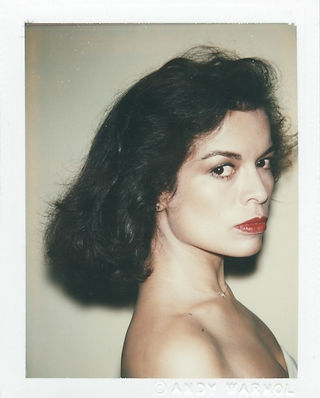
Cover of the album’s standard edition (left); polaroid of Bianca Jagger by Andy Warhol (right).
‘Spotlight’ opens the album delicately, tricking us into thinking the ballads from albums past are still there, as Ware declares: ‘Ain’t enough to say that I think of you / Words can never do the things that I need them to / Tell me when I’ll get more than a dream of you / ’Cause a dream is just a dream and I don’t wanna sleep tonight.’ No one, right now, wants to sleep and imagine what life with people could be. We want to experience it firsthand. So at this precise moment the bouncy bass makes its way in, indicating we’re about to have some welcomed fun. The song’s house beat coupled with the strings make for a hypnotic first number, ending on the repeated heartbreaking line (‘Tell me when I’ll get more than a dream of you’) and an acid house-inspired coda. Truly, the intros and outros on the record are marvellous. It leads to the title track, a masterclass in seduction. Over some Hi-NRG synths, Ware quietly but confidently commands us: ‘Come on now / Push, press, more, less / Here together / What’s your pleasure? / Stop, go, fast, slow / Here together / What’s your pleasure?’ It sounds like we are dancing close to her in a dimly lit club. In the end she keeps repeating to us: ‘I know the way to make you happy / I give you love, you give it back to me’, as if time had stopped and we were stuck in a loop, never to leave her.
Obsessive desire for another’s body and soul is a common theme on the album. Top track ‘Soul Control’ opens with an infectious funk synth chord. Soon enough Ware is certain: ‘Baby, I see the future / It’s me and you’. As the shimmering synths keep floating in the back she sings something we currently want so bad: ‘Baby, it’s automatic / We touch and it feels like magic.’ The feeling is shared by what might be the most straightforward four-on-the-floor song, ‘Save a Kiss’ – a favourite of mine. Its electropop/Eurodisco backing and languishing vocals inevitably recall Swedish dance queen Robyn. ‘That last kiss you gave me / I keep on hitting rewind / Now I need you, baby / I need another last night / Now my heart is racing / Passing all the places we’ve been / Counting down the minutes till I give you all of me’ – we’ve all felt this and know how it can devour us from the inside. Later on, penultimate track ‘The Kill’ offers a darker sonic experience, one where you’re the object of someone’s desire, prey to their love, whether it will make you feel alive or will devour you (‘I follow you through the night like a dog with the scent of your cologne’). As the song slowly reaches its climax, Ware confesses: ‘I’ve been waiting my whole life / For someone who makes me feel like you do / It’s complicated, I can’t lie to you.’ The string and horn arrangement is brilliant, and if ‘Remember Where You Are’ didn’t exist – more on that later –, it would have been a perfect final song.
Other songs provide a more sentimental approach of desire. For instance ‘In Your Eyes’ is led by a lush string arrangement, over which Ware sounds more relaxed, laid back: ‘It feels like we’ve been dancing to this song all of our lives / And when you’re here, I leave the world behind / But I’m not trying to fight it / I’ll just keep on dancing in your eyes.’ Closer ‘Remember Where You Are’ shares a sonic identity, with gospel flourishes thanks to its wonderful backing singers, leaving us with an optimistic note. As the world goes through chaotic times Ware challenges us to overcome our differences: ‘Can we keep moving in the after hours? / Can we keep loving on the edge of doubt?’
One year later and all of those had happened: the album debuted and peaked at number three on the UK and Scottish albums charts (a first for the singer on both charts), it made it to the ninth spot on both Pitchfork and Rolling Stone’s best albums of 2020 lists; and Ware received two Brit Award nominations (her fourth for British Female Solo Artist and her first for British Album of the Year). So as a thank-you to her loyal fans, she decided to release a deluxe edition of the record, subtitled The Platinum Pleasure Edition. It came out on 11 June 2021, a few days shy of the album’s one-year anniversary and is, in my opinion, what a proper deluxe edition should be: a testament to the original album, released a while later, not just three bonus tracks. With this reissue Ware has managed to expand the album’s soundscape with a commendable eight-track reissue, including six original songs, 2018 single ‘Overtime’ and a previously released remix of the album’s lead single ‘Adore You’.
Once again she’s in charge of the dance floor. The first two tracks – ‘Please’ and the killer ‘Impossible’ – take on Hi-NRG and house. On the former Ware coos: ‘Do you need company? / Do you belong to me? / […] / We can make it mutual’; on the latter she proclaims: ‘You’re the name of my own that I can’t wash away / You’re the line in the sand that I just can’t erase / When I am alone I can feel you watching me / You’re the ghost in my head that I don’t wanna see.’ And just like her on this verse, I’m obsessed!
‘Overtime’, released two years prior to the album, was intended to be included on the track list but got eventually cut out. It probably would have felt a bit out of place on the record as it’s more on the strictly dance music part of the spectrum, but it is a delight to discover it as part of the album and see how it bears so many of the album’s particularities: a penchant for old school house music, mesmerising vocals and lustful lyrics. ‘Hot n Heavy’, on the other hand, should be on everybody’s Summer 2021 playlist. It is pure funk bliss. Ware’s performance – and the song as a whole – are like drinking a cool, exotic cocktail on the dance floor of a beach party, as the setting sunshine warms your face. I could listen to the pre-chorus on repeat all day long and die a happy man: ‘Show me all the ways to strike the match / Once you give it up, don’t take it back / Show me all the ways to get to know you / I just wanna be your dream controller / Show me all the ways to strike the match.’ Perfection.
Don’t be fooled by slow burner ‘Pale Blue Light’, which starts off cool and easy with lovely ’80s-Prince synths and electric guitar, and R&B undertones. It evokes the best slow dances of the era: ‘Don’t be a stranger to your own heart / Don’t leave me dancing in the pale blue light / Feels like a dream is almost over / Can I wake up in your arms, your arms, your arms?’ As the second chorus ends, a gospel-like choir takes the lead, intertwining with a glorious delivery by Ware to reach for the stars. ‘0208’ is a sweet tribute to the inception of Ware and husband Sam Burrows’s relationship thanks to a peaceful, dreamy atmosphere. The reissue surprisingly ends the whole thing on a more contemporary and quiet note with the Endless remix of ‘Adore You’, which features the Chinese singer Bibi Zhou and Chinese producer Sihan, giving the song a new identity, more relaxed, breathy.
On the eve of the reissue’s release Ware was asked by USA Today whether she would keep making dance music, to which she replied, ‘I feel like it would be rude not to […].’ I for one cannot wait to hear what she will come up with and in the meantime I’ll be listening, dancing and sweating to What’s Your Pleasure? (The Platinum Pleasure Edition). And it’s not my fault, that’s what Jessie Ware told me to do thirty times on ‘Mirage (Don’t Stop)’: ‘Don’t stop, move it together.’


Comments